Role of the Embryologist in IVF: Importance and Responsibilities

During the IVF process, most patients only speak to fertility specialists. Although unseen and hidden behind the scenes, it’s actually embryologists who ensure that your IVF process goes smoothly! Today, we’re placing embryologists in the spotlight and highlighting the role of the embryologist in IVF: underappreciated but necessary.
What is Embryology?
Before we get into the role of an embryologist, let’s actually look at what embryology is. Embryology is a specialized field of biology that studies the formation, development, and early growth of embryos.
In clinical settings like IVF labs, clinical embryology involves handling gametes (sperm and eggs), culturing embryos, and ensuring that the embryo has optimal conditions for development.
Who is an Embryologist?
An embryologist is a trained reproductive biologist who plays a key role in the development of embryos during ART procedures. They are responsible for many services, such as:
- Handling and preparing sperm and eggs
- Performing fertilization techniques (IVF or ICSI)
- Monitoring embryo development
- Preparing embryos for transfer
- Freezing and storing embryos, eggs, or sperm
- Performing genetic testing when needed
Having a capable and experienced embryologist is a key factor in increasing success rates of fertility treatments. Embryologists continuously monitor your embryos in the lab and make sure that they develop and flourish in the optimal conditions.
What is the Role of the Embryologist in IVF? Key Responsibilities
Embryology requires a thorough understanding of genetics, reproductive endocrinology, and how clinical techniques and technology can be used to support embryos outside the body and create better outcomes.
An embryologist is usually responsible for setting up surgical operations, cryopreserving embryos or gametes, and sometimes interacting directly with patients to guide them through the process. A team of embryologists works together to ensure that the process flows smoothly.
Embryologists don’t play one fixed part in an IVF lab. Instead, they handle multiple services and procedures and relay their skills to various treatments and operations. They are highly skilled and qualified specialists who are integral to any ART treatment.
Maintaining the Lab
Embryologists ensure that the lab environment supports healthy embryo development. They monitor the incubator temperature, humidity, and pH to ensure that the delicate embryos can grow in optimal conditions.
Embryologists are also responsible for checking the air quality and gas concentrations and ensuring that the labs are free of any contaminants. Along with managing time-lapse incubators and imaging tools, embryologists keep all storage tanks locked and monitored for cryogenic integrity.
Analyzing Semen
An embryologist is also involved in testing semen during the analysis. In this process, the embryologist will carefully observe the semen sample under a microscope and assess the shape (morphology), activeness (motility) and sperm count.
This information will shape how the IVF treatment will play out for the involved parties. For example, a couple may be recommended to do ICSI with microfluidic sperm sorting if sperm parameters are poor.
The embryologist will also prepare the sperm sample provided on the day of egg retrieval.
Egg Retrieval
During egg retrieval, a fertility specialist uses a needle to extract fluid from the patient’s follicles and hands over tubes of fluid to the embryologist.
The embryologist then gets to work and examines the fluid under a microscope to identify the eggs. They separate the eggs one by one from the follicular fluid and place them in a container that resembles a fallopian tube. Once they have finished, the eggs are transferred to an incubator until insemination.
Insemination
At Corion Fertility, one of the best IVF centers in India, there are a few different techniques that embryologists use for insemination.
In the conventional IVF process, the embryologist adds a certain number of prepared sperm to a petri dish containing eggs and places it into the incubator in an attempt to start fertilization. The healthy sperm then swim to the eggs to fertilize them.
In the ICSI procedure, the embryologist selects a single healthy sperm and injects it directly into a mature egg. ICSI is ideal for cases with low sperm count or motility.
Checking for Fertilization
Approximately sixteen to eighteen hours after insemination has taken place, embryologists examine the eggs for signs of fertilization under a microscope and inform the patient about the outcome.
Monitoring Incubation
The embryologists then place the fertilized eggs (zygotes) in an incubator, which imitates the ideal conditions of a mother’s womb by regulating the pH and temperature level.
As the embryos grow, the embryologist checks on them daily. Embryologists also refresh the culture media when needed and record development milestones like the cleavage stage, morula, and blastocyst stage.
An embryologist may also need to assist with laser-assisted hatching, which is a technique that helps embryos hatch from their outer shell before implantation.
Genetic Testing
When required, embryologists perform an embryo biopsy, a procedure more commonly called ‘genetic testing’. In this process, the embryologist removes a few cells from the embryo for testing.
Genetic testing can be done to screen for aneuploidies, monogenic diseases, or structural rearrangements. The embryos need to be frozen after testing until their genetic report has been created. Only those embryos with a normal genetic profile are selected for transfer.
Embryo Selection and Transfer
After 5 days, the embryos will have grown from day-3 zygotes to day-5 blastocysts. The embryologist will assess all the embryos and select the best ones for transfer. They will then place the embryo in a catheter and hand it over to the fertility specialist.
The specialist then positions the catheter through the cervix and transfers the embryo through the catheter into the uterus. The embryologist checks the catheter post-transfer to ensure the embryo was correctly delivered.
Embryo Freezing and Gamete Cryopreservation
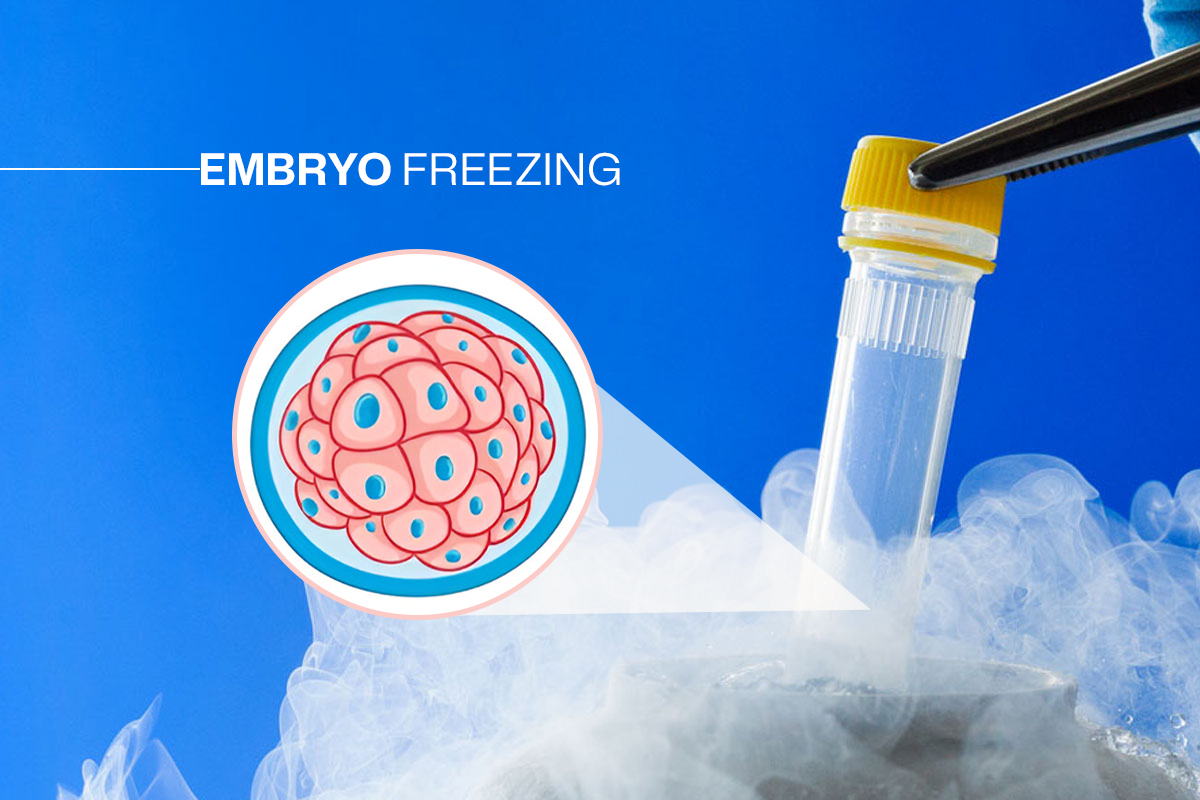
The leftover embryos from the IVF process, and sometimes even leftover eggs and sperm, can be preserved for future use. At Corion Fertility clinic, we use a method called vitrification for cryopreservation. It is a rapid freezing technique that prevents ice crystal formation.
To freeze embryos, the embryologist suspends them in cryoprotectants, places them in labeled storage devices, and freezes them on liquid nitrogen-cooled metal blocks. Sperm are frozen using specialized media and stored in cryo-straws or ampoules using a different process.
Why Choose a Fertility Clinic with Expert Embryologists?
A skilled embryologist is paramount in ensuring the success of any fertility procedure. Embryologists meticulously manage every detail in the background so that your treatment proceeds smoothly and successfully.
Clinics like Corion Fertility Clinic are known for their state-of-the-art laboratories and a team of skilled embryologists who handle every ART procedure with care and expertise. At Corion, your fertility treatments are handled by the best embryologists in India. Book an appointment today.
Frequently Asked Questions:
Q. What does an embryologist do in IVF?
A. An embryologist handles embryos and gametes, performs egg retrievals and embryo transfers, monitors the development of embryos and freezes high-quality leftover embryos.
Q. Is the role of the embryologist in IVF important for IVF success?
A. Yes, an embryologist is not just important but indispensable to the IVF process. Their skill and expertise in handling embryos and managing labs directly affects IVF success.
Q. Can embryos be stored for future use?
A. Yes. Embryos, eggs, and sperm can be stored through cryopreservation for years and used in future IVF cycles.
Q. What is genetic testing?
A. In pre-implantation genetic testing, an embryologist checks embryos for the correct number of chromosomes to improve the chances of a healthy pregnancy.
Copyright © 2026, Corion. All Rights Reserved.
Website is designed & developed by Phi Brands