What Causes Thin Endometrium & How Is It Treated?
What Causes Thin Endometrium & How Is It Treated?
Did you know that the thickness of your uterine lining plays a key role in a successful pregnancy? Yes, it’s true. Just like a healthy endometrium can boost pregnancy success, a thin one can reduce your chances. In fact, a thin endometrium is one of the most common reasons for failed IVF cycles or repeated miscarriages! So, what causes thin endometrium, and how is it treated?
In this blog, we’ll explain what causes a thin endometrium, why it matters, and the treatments available to help improve endometrial thickness and support implantation.
What is the Endometrium, and Why Is It Important?
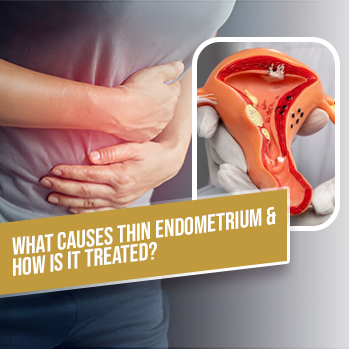
Your uterine lining, or endometrium, is directly involved in the pregnancy process. The endometrium is the inner lining of the uterus that thickens each month in preparation for a fertilized egg to implant. Every month, your body prepares your uterine lining to be the perfect place for an embryo to implant.
Having a thin endometrium means that your uterine lining measures less than 7 mm during the implantation window, which is the period after ovulation. If it isn’t thick enough, an embryo won’t be able to implant successfully, which can result in failed implantation or an early miscarriage.
Ideally, the endometrium normal size in mm is 8–12 mm. It must have a trilaminar (three-layered) structure to support embryo implantation.
What Causes Thin Endometrium?
A thin endometrium can be caused by various reasons. Here are some of the causes of a thin endometrium:
(1) Reduced Estrogen Levels
Estrogen plays a key role in building the endometrial lining during the first half of the menstrual cycle. If your body doesn’t produce enough estrogen, your uterine lining may not develop properly.
(2) Uterine Surgery
If you’ve had uterine surgeries like D&C or fibroid removal in the past, it’s possible that they may have caused damage or scar tissue to form, which can hinder the regular regrowth cycle of the endometrium.
(3) Poor Blood Flow to the Uterus
The endometrium’s thickness depends on the blood flow to the uterus. If blood circulation to the uterus is poor, it can limit the amount of oxygen and nutrients the endometrium receives, which slows down its growth. Some of the major causes of poor blood flow to the uterus include diabetes, smoking, uterine abnormalities, obesity, and high blood pressure.
(4) Long-Term Use of Clomiphene Citrate (Clomid)
Clomid is usually used during ovarian stimulation. It can sometimes thin the endometrial lining by reducing estrogen receptors in the uterus.
(5) Endometrial Receptivity Issues
Occasionally, the uterine lining may appear thick enough but still be biologically unreceptive due to inflammation, hormone resistance, or poor cellular development.
(6) PCOS
PCOS can increase the amount of male hormones, or androgens, in the body, which interferes with the normal ovulation process and prevents the endometrium from getting thick enough.
(7) Autoimmune Diseases
Autoimmune diseases like lupus, celiac disease, etc., can trigger the immune system and cause inflammation in the endometrium.
(8) Infection
One reason for endometrial thickness decreasing is infections like endometrial tuberculosis and STDs. They can cause scarring on the endometrium, which can affect both its thickness and receptivity.
(9) Aging
Aging can reduce the amount of estrogen that a woman’s ovaries produce. Additionally, the regenerative ability of her endometrium slows down as she ages, which results in older women having a thinner endometrial lining.
(10) Nutritional Deficiencies
Severe nutritional deficiencies can trigger the body’s starvation response, which involves breaking down tissue to produce energy. The breaking down of uterine tissue due to lack of nutrition can result in a thinner endometrium.
Now that we’ve explored what causes thin endometrium, let’s look at how it’s diagnosed. Thin endometrium is typically diagnosed through:
(1) Transvaginal ultrasound
(2) Hysteroscopy
(3) Endometrial biopsy
(4) Hormonal tests
Some of the most obvious thin uterine lining symptoms include having very light menstrual bleeding that lasts only for a short while. If your period is getting lighter, your endometrium might be getting thinner as well. Experiencing repeated miscarriages and failed implantations can also point to the endometrium not being thick enough to support a pregnancy.
How To Treat a Thin Endometrium
Treatment options for a thin endometrium include both natural remedies and medical procedures. Medical treatments provide reliable results, while natural treatments support your overall reproductive health to boost fertility. Doctors recommend trying both natural and medical solutions to improve your chances of success.
At Corion Fertility Clinic, we offer some of the most advanced thin endometrium treatment options for endometrium thickening in Mumbai. Some of the recommended treatments for a thin endometrium are:
Supplements
Taking supplements like vitamin E, coenzyme Q10, or L-arginine can improve the blood flow to the uterus and thicken your uterine lining. Always consult your doctor before starting any medication.
Extended Estrogen Therapy
Increased levels of the hormone estrogen can increase blood flow to the uterus. In estrogen therapy, doctors prescribe patients with exogenous estrogen in the form of gels, patches, transdermal creams, or oral pills for 2-3 weeks.
Hysteroscopy
A hysteroscopy is used to check the health of the uterine lining, but it can also be used to remove any scar tissue or adhesions that may be discovered in the uterus. Scar tissue may be caused by infections, PCOS, endometriosis, pelvic inflammatory disease, or past uterine surgeries.
Platelet-Rich Plasma (PRP) Therapy
PRP treatment is an experimental method to improve endometrial thickness. The procedure involves extracting plasma from a sample of the patient’s blood and then injecting it into the patient’s body to boost endometrial growth and regeneration.
Lifestyle Changes To Improve Endometrial Thickness
Improving circulation and hormonal balance naturally can support better endometrial health. We recommend consuming foods or taking supplements that include the following:
(1) Vitamin E
(2) L-arginine
(3) Nitric oxide
(4) Vitamin B12, Vitamin D, folic acid, and iron.
(5) Omega-3 fatty acids
Moderate daily exercise can strengthen your body’s blood circulation and improve blood flow to the uterus, which can, in turn, boost your endometrium’s thickness. Quitting smoking will have a similar effect.
Do not rely on lifestyle changes alone. At Corion Fertility Clinic, we use advanced diagnostic and treatment options to help improve endometrial thickness and support successful implantation.
What if My Endometrium is Too Thick?
While most fertility concerns revolve around a thin endometrium, some women experience endometrial thickening or endometrial hyperplasia. Major thickened endometrium causes include an imbalance between estrogen and progesterone, perimenopause, menopause, and PCOS.
If you’re struggling with a thin endometrium or a thickened one, consult our specialists today for a personalized treatment plan.
Frequently Asked Questions:
Q. Can you get pregnant with a thin endometrial lining?
A. While it certainly is possible, the chances of implantation and a successful pregnancy are significantly lower with a thin endometrium.
Q. How is thin endometrium treated?
A. A thin endometrium is treated using medical procedures like estrogen therapy, supplements, endometrial scratching, PRP therapy, hysteroscopic removal of scar tissue, and lifestyle changes.
Q. Should I follow natural remedies to thicken my endometrium?
A. While natural treatments for endometrial thickness rely on anecdotal success rather than reliable scientific results, they can improve your overall health and improve your fertility as a consequence.
Q. What happens if the endometrium is thick?
A. If the endometrium is thicker than normal, it can cause issues like abnormal uterine bleeding and menstrual irregularities and hinder embryo implantation.
Q. How to reduce the endometrial thickness?
A. If your endometrial lining is abnormally thick, your doctor may recommend hormone therapy to balance estrogen and progesterone levels. Your treatment depends on the underlying cause and whether you want to get pregnant.
Copyright © 2026, Corion. All Rights Reserved.
Website is designed & developed by Phi Brands