Why More Women Are Freezing Their Eggs Before 35 – Expert Insights
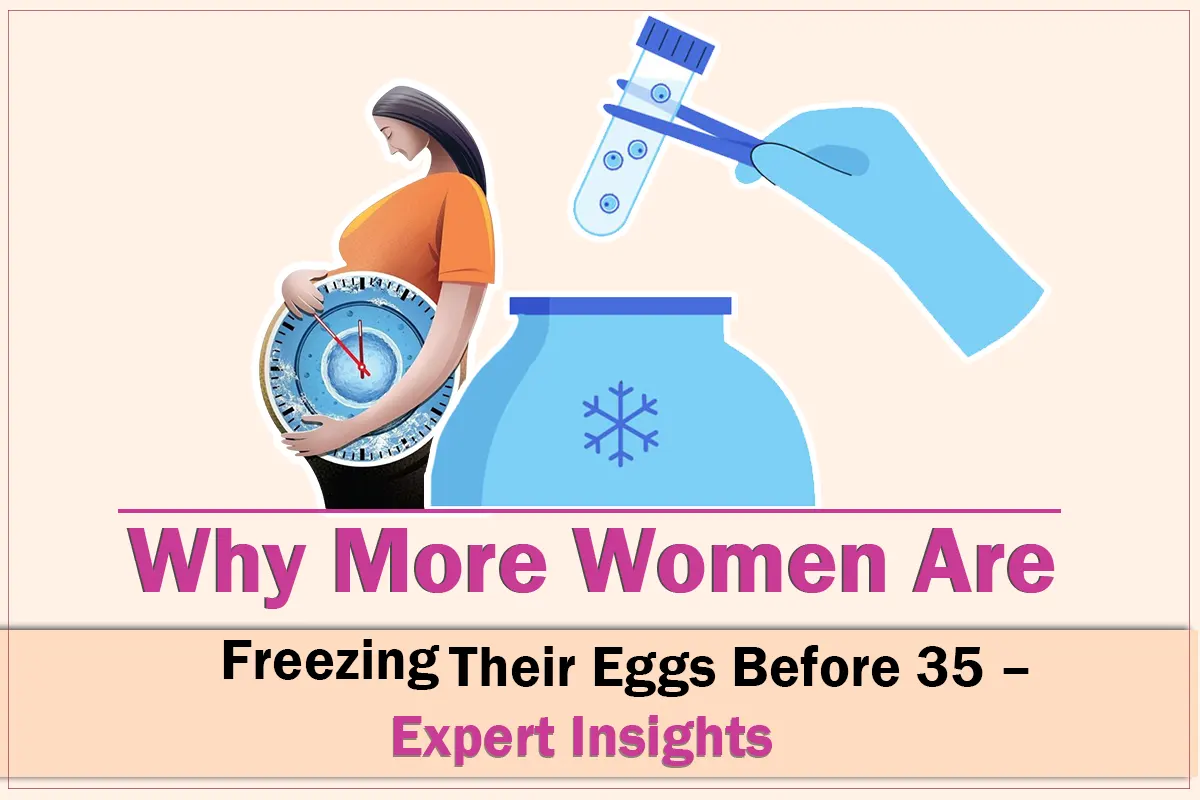 Whatever your reason for delaying pregnancy, egg freezing offers a versatile solution. You may choose to freeze your eggs for many reasons, such as a medical need before cancer treatment or a personal desire to focus on your career first. Surprisingly, more women are freezing their eggs before turning 35 than ever before. Are you curious about the reason behind the rising popularity of egg freezing?
In this blog, we take a brief look at the egg freezing process, why you should consider freezing your eggs, the ideal age for egg freezing, and why more women are freezing their eggs before 35.
What Is Egg Freezing?
Egg freezing is a method of fertility preservation that involves retrieving mature eggs from your ovaries and then freezing them. It can be done for medical or social reasons. The egg freezing process takes approximately 2 to 3 weeks from start to finish.
First, you are given injections that make your ovaries produce more mature eggs. Then, these eggs are retrieved through a thin, ultrasound-guided needle. You’re sedated so that you don’t feel it at all. The eggs are then cooled and stored in liquid nitrogen tanks until they need to be used.
Why Consider Egg Freezing?
As you may already know, fertility declines with age. Women are born with all the eggs they’ll ever have. As they get older, they lose eggs every month during ovulation and menopause. Along with egg quantity, their egg quality declines as well. Thus, women find it harder to get pregnant after 35.
Egg freezing allows you to pause your biological clock until you are ready to conceive. It reduces the pressure on women to have children early in life, even when they’re not ready for motherhood. You can postpone pregnancy to focus on your other life goals, like your career, or wait until you’ve found a partner you want to have children with.
What Is the Ideal Age for Egg Freezing?
Fertility specialists agree that the ideal age for freezing eggs is between your 20s and 30s, particularly in your late 20s and early 30s. This is because you have the best egg quality and quantity. However, some women in their late 30s can also experience satisfactory egg results with egg freezing.
Success rates vary from person to person. Young women with low ovarian reserve or low egg quality may not retrieve as many eggs as women over 35 with above-average egg quantity and quality. However, eggs retrieved from young women are more likely to survive the freezing and thawing process. They also have a higher rate of fertilization and are more likely to result in pregnancy than older eggs.
Why More Women Are Freezing Their Eggs Before 35
Today, there is a growing awareness about the biological clock and fertility preservation techniques. As a result, young women are taking control of their fertility by proactively freezing their eggs. Single and unmarried women are freezing their eggs until they find a life partner, while married women are freezing their eggs to delay motherhood.
Women under 35 respond well to stimulation protocols, require fewer egg freezing cycles, and typically have higher egg quality. Freezing your eggs before 35 can help you save time, money, and effort in the future.
Is 35 Too Late For Egg Freezing?
After 35, egg quality decreases, ovarian reserve decreases, and the risk of genetic defects in children increases. So, freezing your eggs before 35 is ideal.
That doesn’t mean that women over 35 shouldn’t freeze their eggs. In fact, some clinics may allow egg freezing even at 40. But it’s important to acknowledge that women over 35 may not produce as many eggs and need multiple freeze cycles to have similar outcomes as younger women.
Is Egg Freezing Right for You?
Egg freezing gives women the option to delay motherhood. It helps you take control of your fertility journey and plan for your future more effectively. Freezing your eggs can help you chase your dreams without worrying about your declining fertility. For the best results, carefully plan your fertility goals for the future and freeze your eggs as early as possible.
At Corion Fertility Clinic, we offer high-quality egg freezing services, customized treatment protocols, and personalized attention and guidance to each patient. Book a consultation today to experience the Corion difference.
Frequently Asked Questions:
Q. Is 10 eggs enough for one embryo?
A. How many of your eggs develop into embryos depends on egg quality. Doctors recommend freezing as many eggs as possible to ensure that at least one embryo develops.
Q. When can I use my frozen eggs?
A. You can use your frozen eggs any time you want to get pregnant. In India, some clinics may not allow you to store your eggs past a certain duration (10+ years) or use them past a certain age (40+ years).
Q. What are the benefits of egg freezing?
A. Egg freezing gives you flexibility to delay pregnancy, helps you focus on your career, extends your fertility window, and gives you a backup plan in case you are unable to conceive naturally in the future.
Q. Why do women under 35 freeze their eggs?
A. Women under 35 may freeze their eggs for personal reasons, such as pursuing a career or delaying parenthood. Egg freezing is also popular among women who have low ovarian reserve, a family history of premature menopause, or have yet to find a partner.
Disclaimer:
The information shared in this blog is for educational purposes only and should not be used as a substitute for professional medical advice.
Copyright © 2026, Corion. All Rights Reserved.
Website is designed & developed by Phi Brands