
Key Difference Between IVF and Test Tube Baby
Key Difference Between IVF and Test Tube Baby
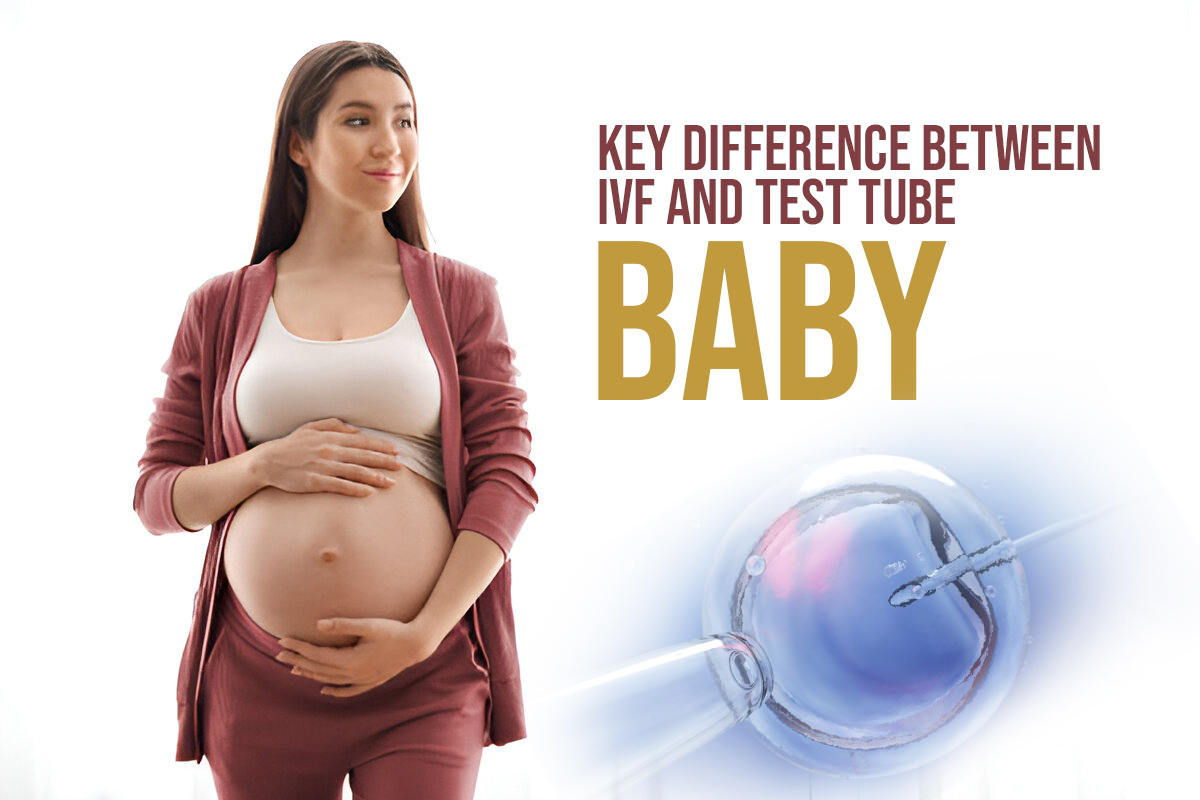
You may have heard people throw around the terms ‘IVF’ and ‘test tube baby’ and wondered how they differ from each other. While these terms are sometimes used interchangeably, which one is more scientifically and medically accurate? In this blog, we’re outlining the key difference between IVF and test-tube baby and understanding the science behind these terms.
What is a Test Tube Baby?
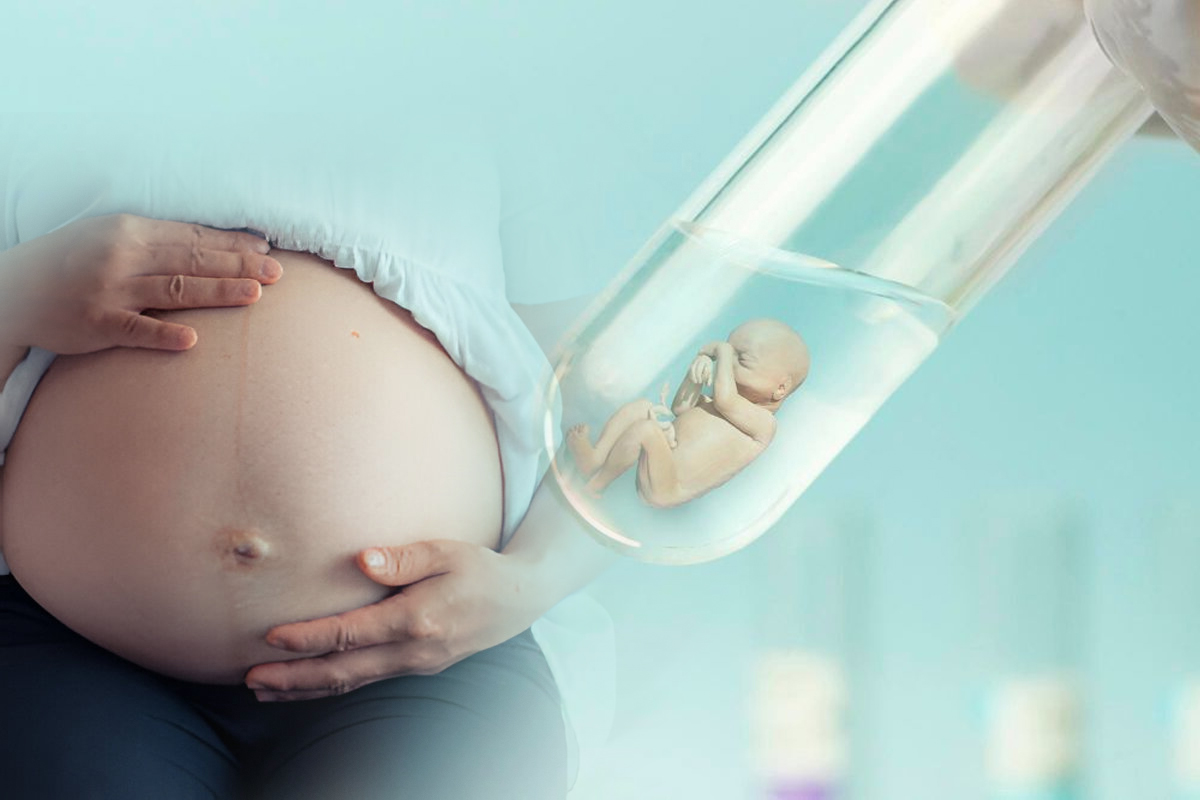
The term ‘test tube baby’ became popular in the late 1970s, when Louise Brown, the world’s first IVF baby, was born. Some people mistakenly believed that the baby was grown entirely in a test tube!
While the name implies that babies are ‘grown’ in test tubes, it’s a misnomer. In reality, labs use petri dishes, not test tubes, to combine the egg and the sperm together during fertilization.
The phrase ‘test tube baby’ was sensationalized in media and public discourse at a time when assisted reproduction was still a new technology and people did not understand what happens during the IVF process. Today, thanks to growing awareness regarding infertility and ART, most people and doctors use the term IVF instead.
What is IVF?
So what is IVF, and what really happens during the process? IVF, or in vitro fertilization, refers to a fertility technique in which the fertilization takes place outside the woman’s body.
More specifically, it is when the eggs are fertilized with sperm outside the body and the developed embryo is placed back in the woman’s body. An IVF test tube baby develops in the womb of the mother, just like naturally conceived babies.
Who Can Benefit From IVF?
IVF treatment can be helpful for individuals and couples who have difficulty conceiving naturally. IVF is highly versatile and can treat the following cases:
For couples with
- Unexplained infertility
For women with
- Blocked fallopian tubes
- Advanced maternal age
- PCOS
- Endometriosis
- Premature ovarian failure or early menopause
- Diminishing ovarian reserve (DOR)
- Uterine fibroids
For men with
- Poor semen parameters (low sperm count, motility, abnormal morphology)
- No sperm in semen
- Advanced paternal age
And finally, for patients who
- Do not want to pass on a genetic condition to their offspring
- Are using donor sperm/eggs
Process of IVF and Test Tube Baby
Even today, thousands of Indians search for high-quality test tube baby treatment near them. The ‘test tube baby process’ refers to the process of IVF treatment. The IVF process includes certain stages, such as:
Consultation
First, get in touch with a fertility specialist. At Corion Fertility Clinic, We will assess your situation and the extent of your infertility issues by asking you questions about your medical history and scheduling diagnostic tests.
Ovarian Stimulation
In the next stage of the IVF procedure, doctors will prescribe hormonal medications to the woman, which are usually given in the form of injections. These medications will stimulate the woman’s ovaries into producing multiple mature eggs instead of one during ovulation.
Egg Retrieval
Doctors will continue to monitor her follicles through ultrasounds and blood tests until they reach an appropriate size. While the patient is sedated, they retrieve the mature eggs through a fine ultrasound-guided needle.
Embryo Transfer
The developed eggs are observed until day 3 or day 5. Once they have grown enough, an embryologist selects the most viable embryos and transfers them to the woman’s uterus via a thin and flexible ultrasound-guided tube.
Two weeks after embryo transfer, the patient will be given a blood pregnancy test to confirm whether the embryo has successfully implanted or not.
Cost of IVF and Test Tube Baby in India
The cost of IVF in India depends on several factors, such as the clinic’s location, area of expertise, and experience of the doctors. Clinics like Corion Fertility offer top-notch fertility care at highly affordable rates.
The cost can also increase if you choose to avail additional fertility services like sperm retrieval, sperm sorting techniques, genetic testing, etc.
Risks of IVF Treatment
There are several risks associated with IVF treatment. These include:
(1) Multiple Pregnancy
Many doctors believe that IVF causes multiple pregnancies, especially when multiple embryos are transferred to the body. Nowadays, most clinics will also only transfer a single embryo at a time to reduce this risk.
(2) Miscarriage
Some doctors believe that IVF can increase the risk of miscarriage. However, it could be due to the fact that most people who undergo IVF have serious infertility issues and may be more likely to have a miscarriage.
(3) Ectopic Pregnancy
In an ectopic pregnancy, the egg implants outside the uterus, usually on a fallopian tube. Ectopic pregnancies can be life-threatening and sometimes require surgery. There may be a risk of ectopic pregnancy during a test tube baby procedure.
(4) Ovarian Hyperstimulation Syndrome (OHSS)
OHSS is a condition in which a woman’s ovaries overreact to fertility drugs. This rare condition requires medical treatment, without which it can be fatal.
(5) Bleeding and Infection
There is a minor risk of bleeding and infection from the egg retrieval procedure. At top IVF clinics like Corion Fertility clinic, we reduce this risk through safe surgery protocols.
(6) Premature Delivery
The risk of a premature delivery or low birth weight is slightly more common in IVF births. It can be managed with good prenatal care.
Is There a Difference Between IVF and Test Tube Baby?

‘Test tube baby’ is a non-medical term, which is why it isn’t widely used today. Both doctors and patients call the technique IVF, or in vitro fertilization.
A child born from IVF is the same as a child born naturally without reproductive assistance. Babies born through IVF are not grown in test tubes; they are carried to term in the womb of the mother. All the IVF process does is help patients with infertility become pregnant in the first place.
At Corion Fertility Clinic, we love making the impossible possible and bringing loved and wanted children into the world. We offer IVF and other assisted reproductive techniques that can help you reach the final destination on your journey to parenthood.
Frequently Asked Questions:
Q. What is the medical treatment used for test tube babies?
A. The test tube baby technique is called in vitro fertilization by most doctors today.
Q. Test tube baby vs IVF baby: which has more health complications?
A. Both ‘test-tube’ babies and IVF babies are born using the same fertility treatment: in vitro fertilization. There is no difference between the health conditions and complications that they face.
Q. Is IVF painful?
A. Some parts of the IVF process, like hormone injections or egg retrieval, may cause slight discomfort. However, most patients report no pain during the procedure.
Q. Can I choose the gender of the baby through IVF?
A. As per the PC-PNDT Act, gender selection of a child is not legally permitted in India.
Copyright © 2026, Corion. All Rights Reserved.
Website is designed & developed by Phi Brands