IVF Success Rates Explained: What Every Couple Should Know
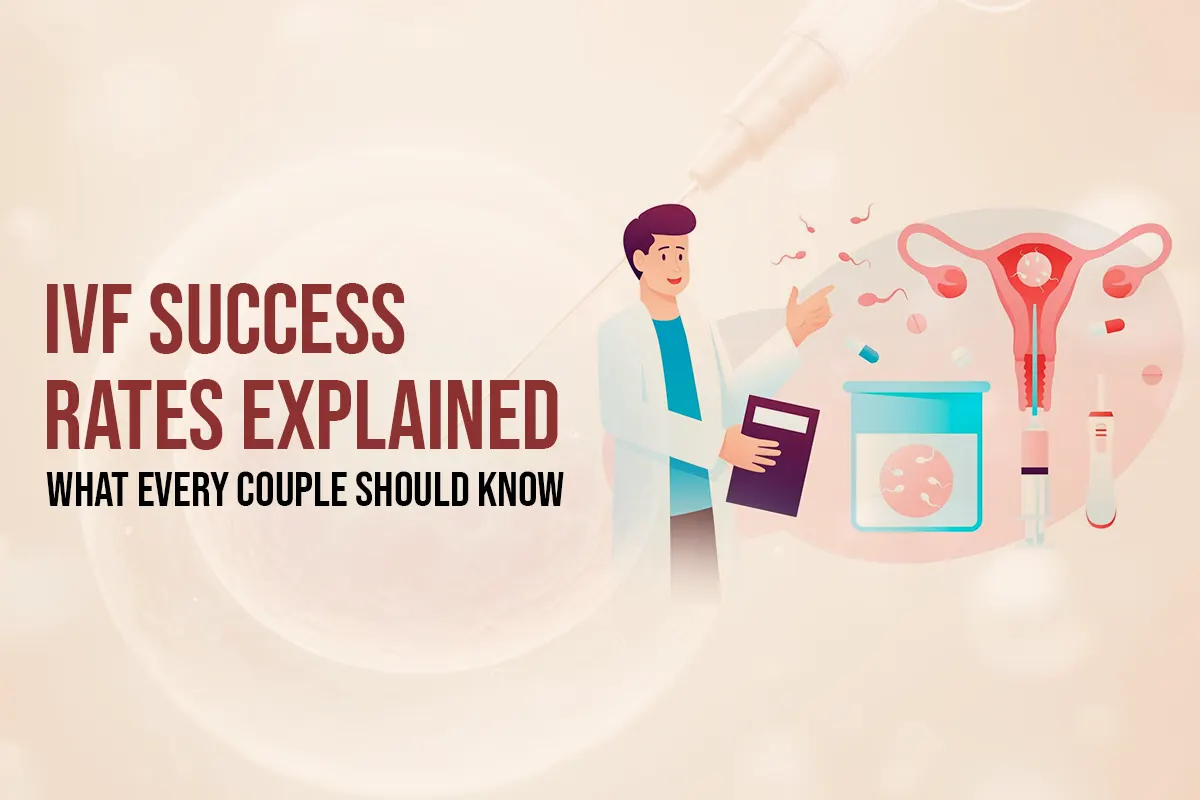
Success rates matter: they’re the most important aspect of any medical treatment, perhaps even more so than cost or duration. After all, if a treatment isn’t successful, it means more time, more money, and more emotional stress! At Corion Fertility clinic, we believe that information about fertility should be accessible to all. In this guide, we explain what IVF treatment is, the various types of IVF treatments in India, IVF success rates, factors affecting success rates, and what every couple should know about IVF.
What is IVF?
IVF, or in vitro fertilization, is an assisted reproductive technology that can help those with fertility issues conceive a child of their own. In vitro fertilization can take anywhere from 3 weeks to 3 months, depending on the protocols followed. The stages of IVF treatment are:
- Ovarian stimulation
- Egg retrieval and sperm retrieval
- Fertilisation
- Embryo culture
- Embryo Transfer
- Pregnancy Testing
Types of IVF Treatments in India
Your fertility specialists will study the cause of your infertility and fertility history to recommend the best type of IVF treatment for you. Here are the various types of IVF treatments in India:
Conventional IVF
This is the most popular type of IVF treatment. It follows all the stages of in vitro fertilization we mentioned earlier.
IVF With Donor Eggs/Sperm
IVF is also possible with donor gametes. If you or your partner have poor egg or sperm quality, a donor gamete can be used during the IVF process. IVF with donor eggs or sperm usually has a higher success rate, as they are donated by young and healthy donors.
Mini IVF
Mini IVF or or Mild Stimulation IVF follows a similar process as conventional IVF, but uses fewer medications in the process. It is ideal for those who may be sensitive to fertility medications and are at an increased risk of developing OHSS.
Intracytoplasmic Sperm Injection (ICSI)
ICSI is a subtype of IVF treatment that involves injecting a single sperm cell directly into a mature egg. It is mainly used to treat male factor infertility.
IVF Success Rate in India
India has become a very popular destination for IVF treatments. Many clinics in Mumbai boast cutting-edge medical infrastructure and advanced treatments that can increase your chances of conception. IVF in India is very affordable compared to the USA and European countries.
In India, the success rate of IVF treatment is 30 to 35% per cycle, according to the All India Institute of Medical Sciences. It can be as successful as 40% with the right protocols. Compare it to the success rate of IUI treatment (10-15%), and you’ll realize why IVF is the most preferred treatment for infertility in the world.
Factors Affecting IVF Success Rates India
Apart from the type of treatment and the expertise of the clinic, IVF success rates in India also depend on the following factors:
Age
The age of the woman is the most important factor affecting the success rate of IVF treatment. Women who are 35 and below face high success rates with IVF treatment. As women age, their egg quality and quantity decrease, and this lowers their chances of success with IVF.
Under 35
Women under 35 often have good-quality eggs and a high ovarian reserve. They have the highest success with IVF treatment, approximately 35 to 40% per cycle.
35 to 37
During this period, egg quality and quantity face a small decline. Women in this category can still get pregnant, but it may take longer to conceive.
38 to 40
There’s a sharp decline in fertility. These women face lower success rates with IVF, approximately 20 to 30% per cycle.
Over 40
Women over 40 often face difficulties getting pregnant with IVF due to a drop in egg quantity and quality. It may take these patients multiple IVF attempts to be successful, as success rates can drop as low as 10%.
Reproductive History
Women who have had IVF failures, miscarriages, or chemical pregnancies in the past may experience a lower success rate than others with IVF treatment.
Reason For Infertility
The underlying cause of infertility also affects the success rates with IVF. issues like a fallopian tube blockage may be easier to treat than a thin uterine lining.
Sperm Quality
Sperm quality parameters affect the rate of fertilization, as slow-moving or abnormally shaped sperm may find it harder to fertilize the eggs. This lowers IVF success rates.
Fresh vs. Frozen Embryos
Using fresh vs frozen embryos affects the success rate of IVf treatment. In some cases, frozen embryos provide better results than fresh ones.
Transferring Multiple Embryos
Transferring more than one embryo at a time may improve pregnancy chances, but it can also increase the risk of pregnancy complications due to multiple births.
Lifestyle Factors
Smoking and alcohol consumption have been linked to a decrease in fertility in both men and women. Following a sedentary lifestyle can also reduce fertility.
IVF Success Rate After Multiple Attempts
Yes, the success rate of IVF treatment increases with each attempt. That is why many couples don’t stop after an IVF failure but continue to go through IVF cycles.
The cumulative birth rate after 6 IVF cycles can be as high as 86%. Some couples may achieve success on their first IVF attempt, while others may need 2-3 cycles to get pregnant. Everyone’s fertility journey is unique. Instead of comparing your IVF progress with others, we recommend opting for treatments that may improve your success rate.
Services That Improve IVF Success Rates
IVF protocols can be tweaked by combining them with other fertility treatments to maximize effectiveness. Here are certain fertility treatments and services that can increase the success rate of IVF treatment.
Preimplantation Genetic Testing (PGT)
Preimplantation genetic testing can be used to screen the embryos before implantation. It can identify embryos with normal chromosomes that have the best chance of success. Certain types of PGT can also screen embryos for inherited genetic conditions/diseases.
Embryoscope
Time-lapse embryo monitoring is possible through an embryoscope, which is a unique incubator that allows an embryologist to monitor the embryos without having to disturb them. They can safely study the embryos and select the most viable ones for transfer.
Vitrification
Vitrification is an advanced flash-freezing technique used in cryopreservation. Unlike slow freezing, vitrification freezes the eggs, sperm, or embryos instantly, which prevents the formation of ice crystals that could potentially affect their survival rates.
Laser Assisted Hatching (LAH)
Sometimes sperm are unable to pierce through the outer layer of the egg to fertilize it. Assisted hatching creates an opening in the egg’s outer layer, which makes fertilization easier and improves the number of embryos created.
Tips to Improve IVF Success
Even the best IVF clinic Mumbai doesn’t have a 100% success rate. Here are some tips that you can use to improve your chances of conception with IVF:
Get a Fertility Evaluation
Get a comprehensive fertility evaluation as soon as possible. This can help your doctors determine the cause of your infertility and identify which fertility treatments will be the most effective.
Maintain Healthy Lifestyle Habits
Avoid smoking, drinking, abusing substances, and living a sedentary lifestyle. Take steps to effectively manage your stress and protect your emotional health.
Manage Your Weight
Try to manage your weight so that you are neither underweight nor overweight. If required, make diet and lifestyle changes to do so. Obesity can make it harder to get pregnant and significantly increase the risk of miscarriage and pregnancy complications.
Manage Health Conditions
Certain chronic conditions like diabetes, PCOS, and endometriosis can impact your fertility and sometimes make it harder to get or stay pregnant.
Improve Sperm Health
The male partner must take steps to improve their sperm quality. This may include making certain diet and lifestyle changes, such as exercising, cutting out tobacco and alcohol, and taking fertility supplements.
Take Supplements
Take any supplements, like CoQ10 and folic acid, that your fertility specialist prescribes. Try to follow the recommended dosage and schedule as closely as you can.
Choose The Right Clinic
A clinic that offers personalized protocols will be able to provide you with better care than one that uses a one-for-all approach. It’s also important to check the medical infrastructure and technologies that they offer.
How to Choose the Right IVF Clinic?
The right IVF clinic will offer you success, convenience, and compassion. They will be considerate in their approach and offer personalized treatment plans to each patient to maximize their chances of conception.
If you’re searching for a clinic in Mumbai, look for one that combines advanced technology, personalized treatment, and compassionate care. Corion Fertility Clinic has state-of-the-art facilities and offers many types of fertility treatments, including IVF, ICSI, IMSI, Sperm retrieval, Cryopreservation, and so on.
With a stellar reputation, high success rates, and advanced medical facilities, we are revolutionizing IVF and reproductive healthcare in India. Corion Fertility Clinic offers high-quality fertility treatments at affordable rates. Book a consultation today!
Frequently Asked Questions:
Q. How many IVF cycles do I need to become pregnant?
A. On average, most couples need just 2 to 3 IVF cycles to become pregnant. Of course, individual factors like reproductive health and history also play a huge role in how long it will take.
Q. Do younger women have higher success rates with IVF treatment?
A. Yes, younger women can have success rates as high as 40%, as they usually have high egg quality and quantity.
Q. Is IVF 100% successful?
A. No, IVF can never be 100% successful, as it is always possible for the first IVF cycle to fail.
Q. When should a couple choose IVF treatment?
A. A couple should choose IVF treatment if the male partner has poor sperm parameters or the female partner has tubal disorders, uterine disorders, or follicular issues.
Q. Does IVF success rate increase with frozen embryo transfer?
A. Many studies show that IVF success rates with frozen embryo transfer are similar to those with fresh embryo transfer. However, frozen embryo transfer may have slightly higher success rates in exceptional cases.
Copyright © 2026, Corion. All Rights Reserved.
Website is designed & developed by Phi Brands